


TRADEMARK
What Is a Trademark?
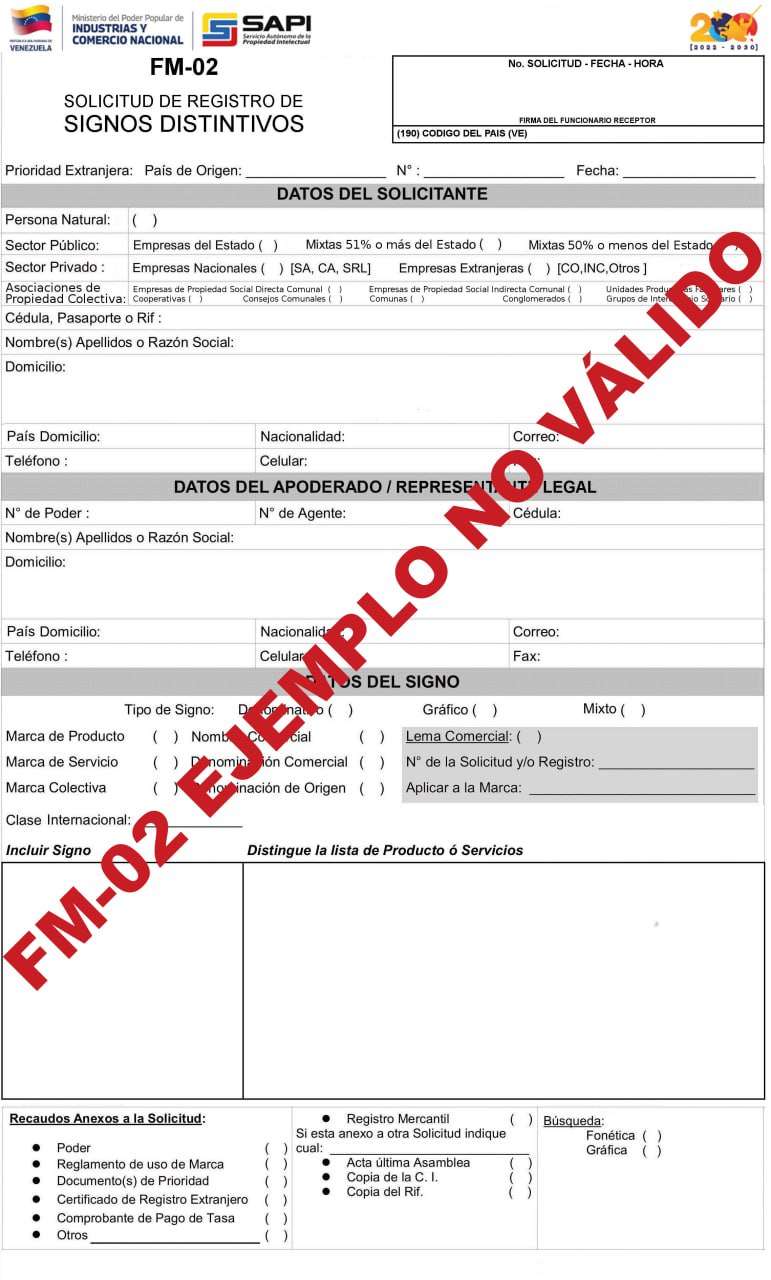
A trademark is a distinctive symbol that indicates that certain goods or services have been produced or provided by a specific person or company. Registered trademarks offer protection to their owners by guaranteeing them the exclusive right to use the trademark to identify their products, or to authorize third parties to use it in exchange for payment.

Types of Trademarks
Trademark
According to the current Industrial Property Law, a trademark is a distinctive sign that identifies and distinguishes a company’s products, services, or activities. It may consist of words, names, logos, images, symbols, or a combination of these elements. Trademarks are also classified as either product trademarks or service trademarks. Depending on their composition, they can be word marks (words or letters only), figurative marks (images or designs only), or mixed marks (a combination of text and an image).
Trade Name
A trade name refers to the name or symbol that identifies and distinguishes a company, business, or establishment in the market. Its purpose is to differentiate one commercial activity from others, making it easier for customers and users to recognize it.
Slogan
Complementing the brand is the tagline, which is a phrase, expression, or slogan that accompanies a brand or trade name to reinforce its identity and make it more recognizable to the public. Its purpose is to convey a distinctive message that complements the image of the company, product, or service.
What cannot be registered as a trademark?
In accordance with the provisions of Article 33 of the Industrial Property Law
- Words, phrases, images, or symbols that suggest immoral ideas or that violate morality and public decency
- National symbols, emblems of states or municipalities
- The Red Cross symbols
- Symbols or emblems of other countries
- Geographical names, as an indication of place of origin
- Colors on their own
- Geometric shapes that are not novel
- Cartoons, portraits, drawings, or depictions that ridicule people or objects deserving of respect and consideration
- Words or terms that have entered common usage (become commonplace)
- Words commonly used to indicate the genus, species, nature, origin, quality, or form of products
- Trademarks that are graphically and/or phonetically similar to another already registered trademark
- Misleading trademarks, whether due to geographical origin, laudatory nature, or corporate origin
Rights granted to the trademark owner
1.- Protects against unauthorized use or imitations that infringe upon the rights of the rights holder
2.- Allows to take legal action against any third party who, without the owner’s consent, uses or applies the registered trademark to other products, before any state court
3.- Prevents that any third party sell or place on the market products bearing the protected trademark without its authorization
What is the Niza Classification?
It serves as a universal guide for registering your trademark. It is a system used worldwide to organize products and services into 45 different categories.
What is it for?
It makes the legal registration of trademarks much easier, allowing you to know exactly in which sector your name and logo are protected.

Trademark Renewal
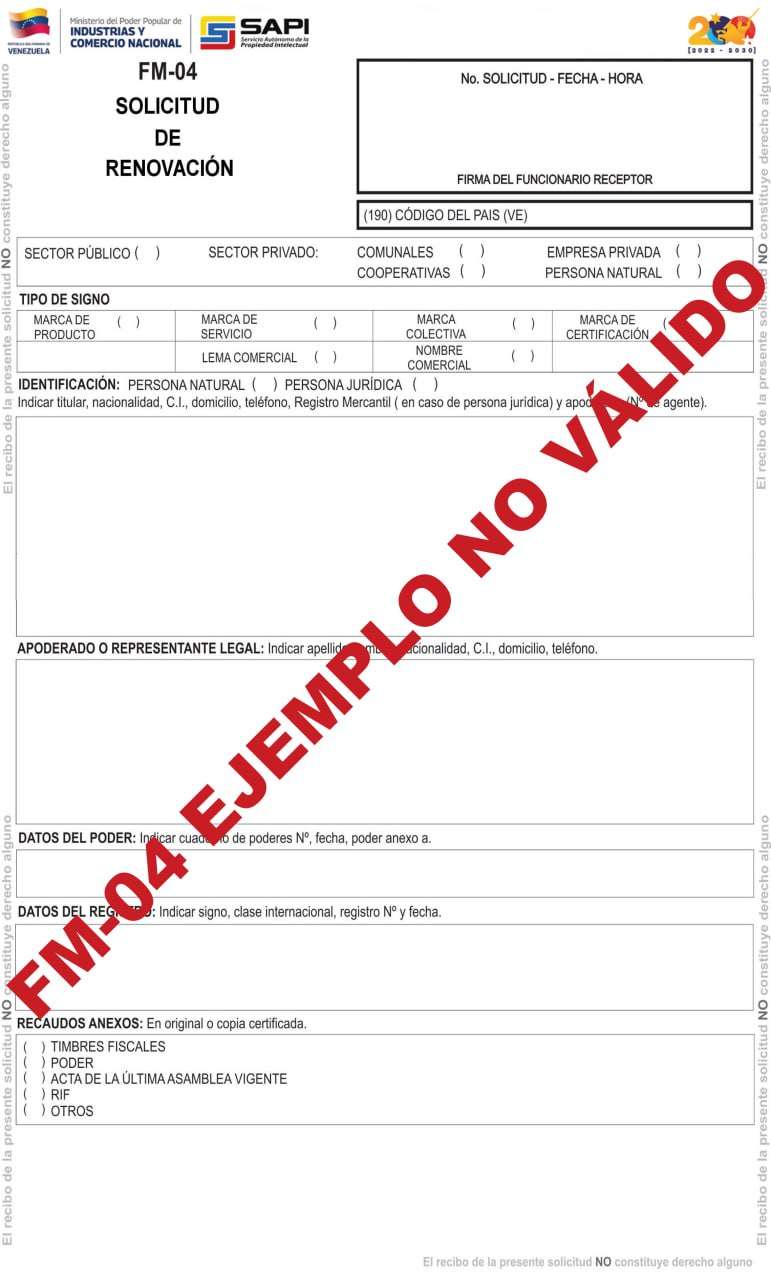
A trademark may be renewed six (6) months before or six (6) months after its expiration date during the grace period, in accordance with the OFFICIAL NOTICE DRPI-AO-No. 15-2024. The term of the agreement shall be fifteen (15) years, renewable indefinitely.
Requirements
- Cancel the trademark renewal fee, depending on the applicable case, before the registration expires; if you do so after that date, a surcharge will apply.
- Fill out and download the Trademark Renewal Form (FM-04)
- Copy of the Certificate of Registration
- Copy of the articles of incorporation of the business corporation
- A copy of the minutes from the last meeting, if the organization has been in existence for more than five years
- An authenticated power of attorney, if the applicant is not the owner. If the document originates from abroad, it must be translated by a sworn public translator, certified, apostilled, and duly registered with the Industrial Property Registry
Transfer of Trademarks
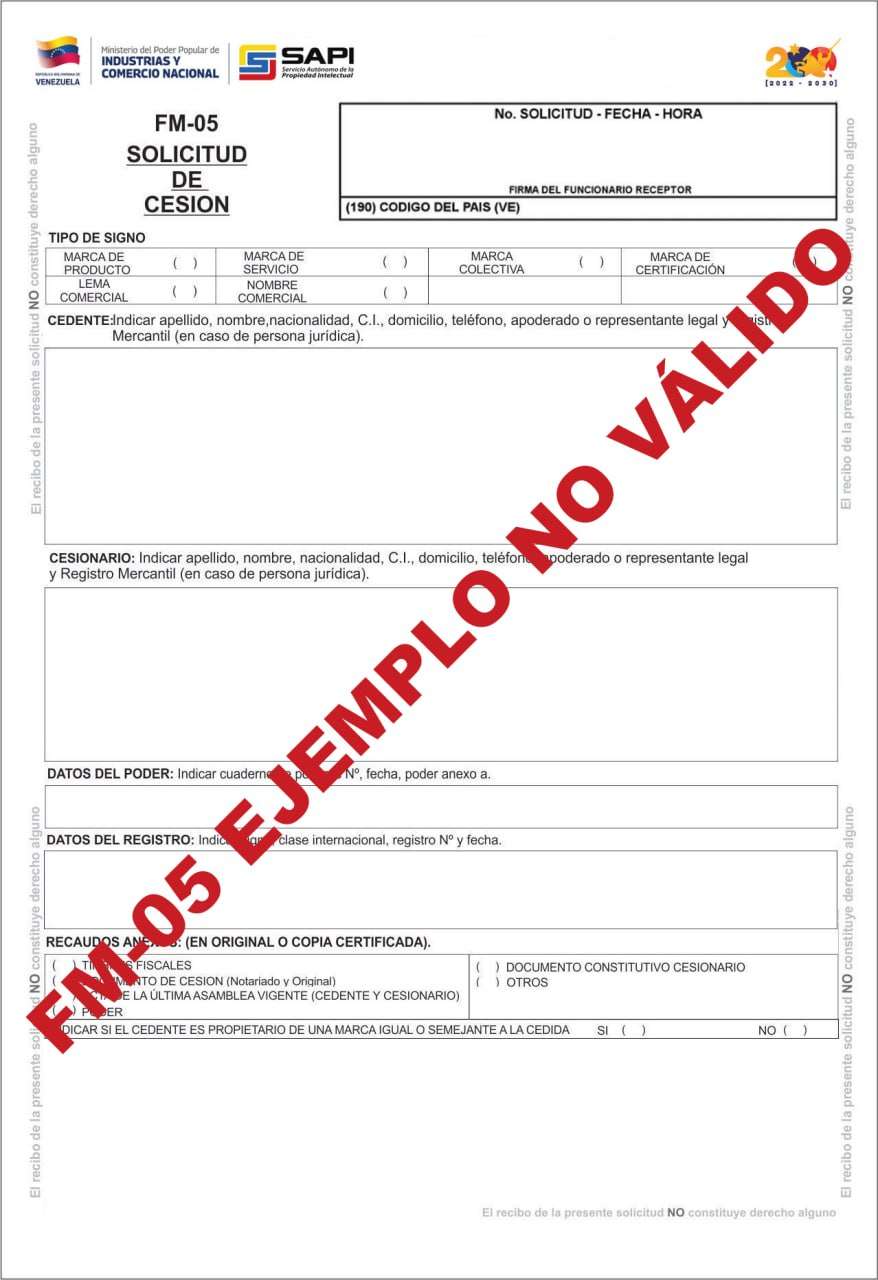
A trademark assignment is a formal contract through which the trademark owner transfers all rights to the registered trademark, in accordance with the provisions of Articles 4, 89, and 90 of the Industrial Property Law.
These contracts must be filed with the Industrial Property Registry in order to be enforceable against third parties.
Requirements
- Fill out and download the Trademark Assignment Form (FM-05).
- Original notarized assignment document, or a certified copy thereof. As an exception, a notarized assignment document is not required when an individual assigns the trademark to a company in which she is a partner or sole owner; in such cases, a simple assignment document stating the transfer of the trademark is sufficient. If the document originates from abroad, it must be translated by a sworn public translator, certified, and apostilled.
- A copy of the minutes from the most recent meeting (if the organization has been in existence for more than 5 years), accompanied by the original.
- A certified power of attorney, if the applicant is not the owner, along with a copy to be numbered. If the document originates from abroad, it must be translated by a sworn public translator, certified, apostilled, and duly numbered by the Industrial Property Registry.
Change of name or address
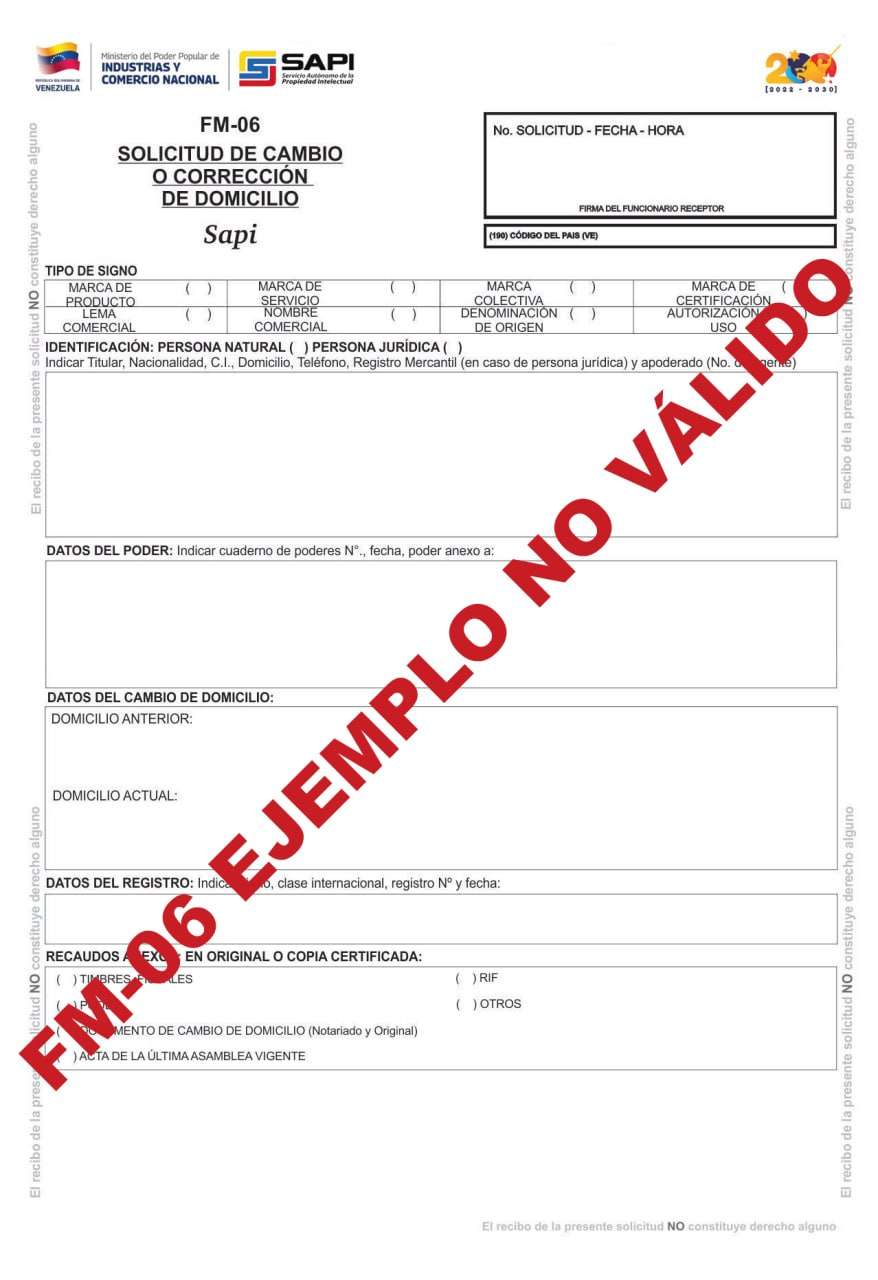
To change the name or address of a trademark owner, the interested party may make the necessary changes after the trademark has been granted.
Requirements
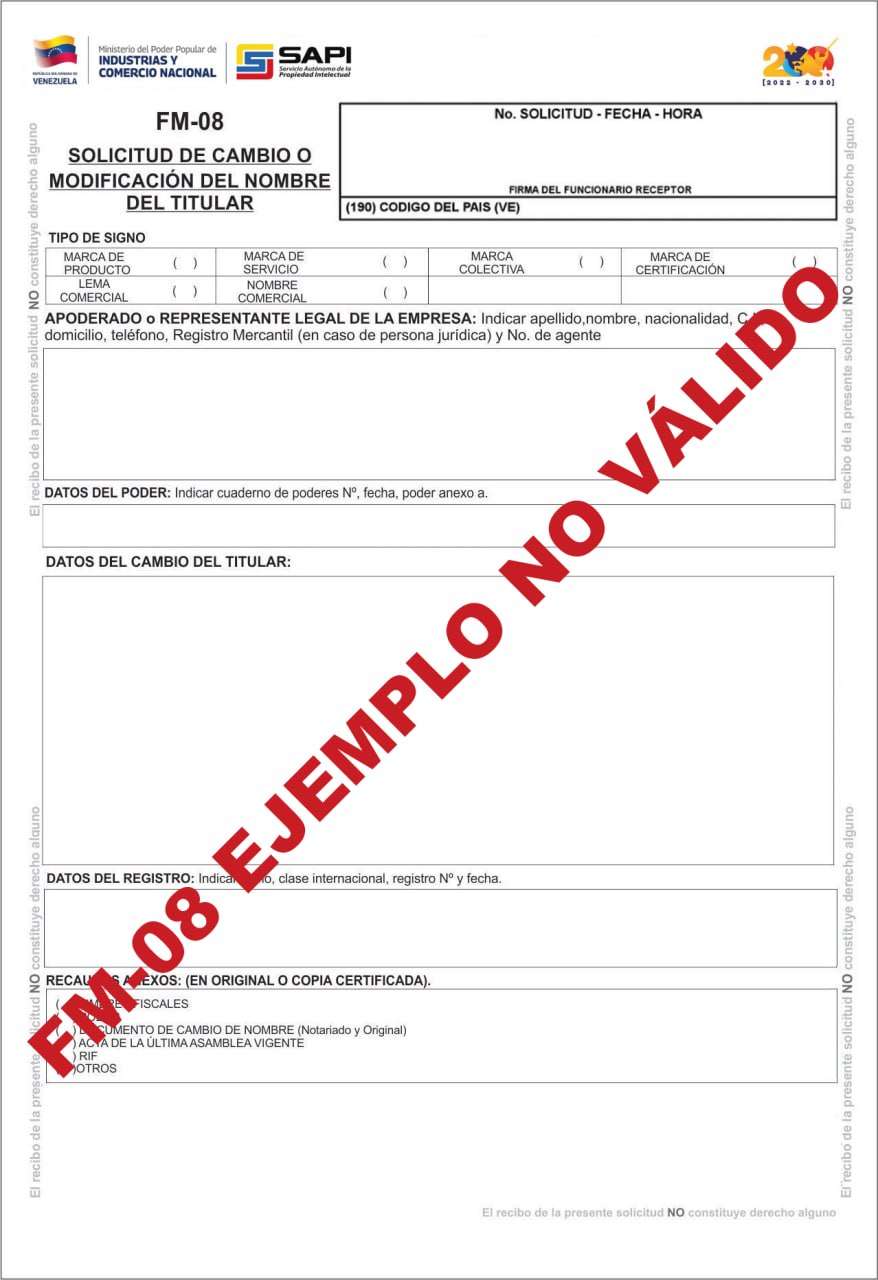
- Fill out and submit the Name Change Form (FM-08) or Form for Change of Address of the Trademark Owner (FM-06)
- Submit a copy of the minutes from the last meeting (if the organization has been in existence for more than five years), along with the original for verification.
- A certified power of attorney, if the applicant is not the owner, along with a copy for filing. If the document originates from abroad, it must be translated by a sworn public translator, certified, apostilled, and duly filed with the Industrial Property Registry.
- Original document certifying a change of name or address, or a certified copy. If the document is from abroad, it must be translated by a sworn public translator, authenticated, and apostilled.
Licencia de Uso y Fusión
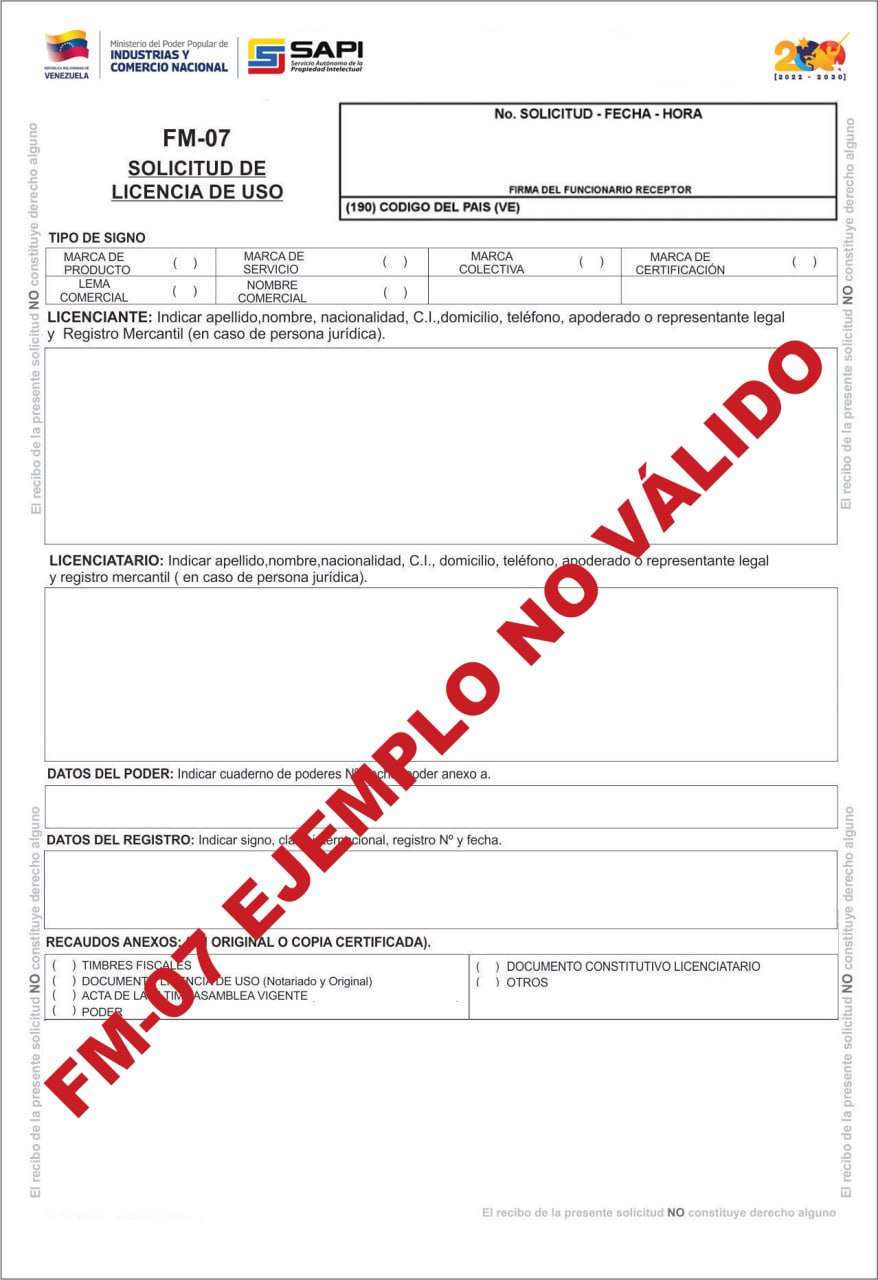
Licencia de Uso: is granted by the owner of a registered trademark to a third party, so that the third party may use the trademark with the owner’s permission and authorization.
Merger: this occurs when two or more pre-existing companies merge to form a new one, with one company absorbing the others to create a new business entity.
Requirements
- Cancelar tasa de Fusión y/o Licencia de Uso, según el caso que corresponda.
- Llenar y descargar la planilla correspondiente (para Licencia de Uso Planilla FM-07 and for Fusion Planilla FM-05)
- Documento original de la Fusión/Licencia de Uso autenticado o copia certificada. Si proviene del exterior, debe estar traducido por intérprete público jurado, visado y apostillado
- Submit a copy of the minutes from the most recent meeting (if the organization has been in existence for more than five years), along with the original for verification
- A certified power of attorney, if the applicant is not the owner, along with a copy for filing. If the document originates from abroad, it must be translated by a sworn public translator, certified, apostilled, and duly filed with the Industrial Property Registry.
Tarifas y cuentas bancarias
Guía y modelos de planillas según el tipo de trámite
Multimedia
Gallery